What's The Cheapest Retaining Wall To Build On The Gold Coast? Material Cost Vs Lifespan Compared
The cheapest retaining wall to build on the Gold Coast is a treated timber sleeper wall. For homeowners searching for affordable retaining walls Gold Coast wide, timber is the lowest entry price for low, short, non-load-bearing runs. But whether timber is the cheapest retaining walls Gold Coast option over the life of your property is a different question entirely — and that is the one worth answering before you commit.
The Cheapest Retaining Wall, in One Line
Treated timber sleeper: cheapest upfront, shortest lifespan. If that is your situation and your project suits it, timber is the right call. If it does not, you may be paying for the same wall twice.
Ranked: Cheapest to Dearest Retaining Wall Materials on the Gold Coast
Here is how the main wall materials stack up, from cheapest entry point to most expensive, based on 18 years of quoting and building walls across the Gold Coast:
- Treated timber sleeper — cheapest A timber sleeper retaining wall Gold Coast builders price as the entry-level option — treated pine sleepers are the lowest cost material and labour combination available. For garden bed edging, short runs and walls under a metre in height, timber does the job at the lowest price. The catch on the Gold Coast specifically is moisture. Heavy summer rainfall, high humidity and the damp sandy coastal soils common across the region accelerate timber decay faster than in drier inland climates. A treated pine sleeper wall that might last 15 years in a dry environment can deteriorate noticeably faster in a low-lying Gold Coast yard with poor drainage.
- Concrete sleeper — mid-range Concrete sleeper retaining wall cost sits higher than timber upfront — materials cost more and they are heavier to work with. The trade-off is a wall that handles load-bearing runs, resists moisture without degrading and lasts substantially longer. On sloped blocks, on sites with significant soil pressure behind the wall, or anywhere the wall needs to retain more than a garden bed, concrete sleeper is where most experienced builders move the recommendation.
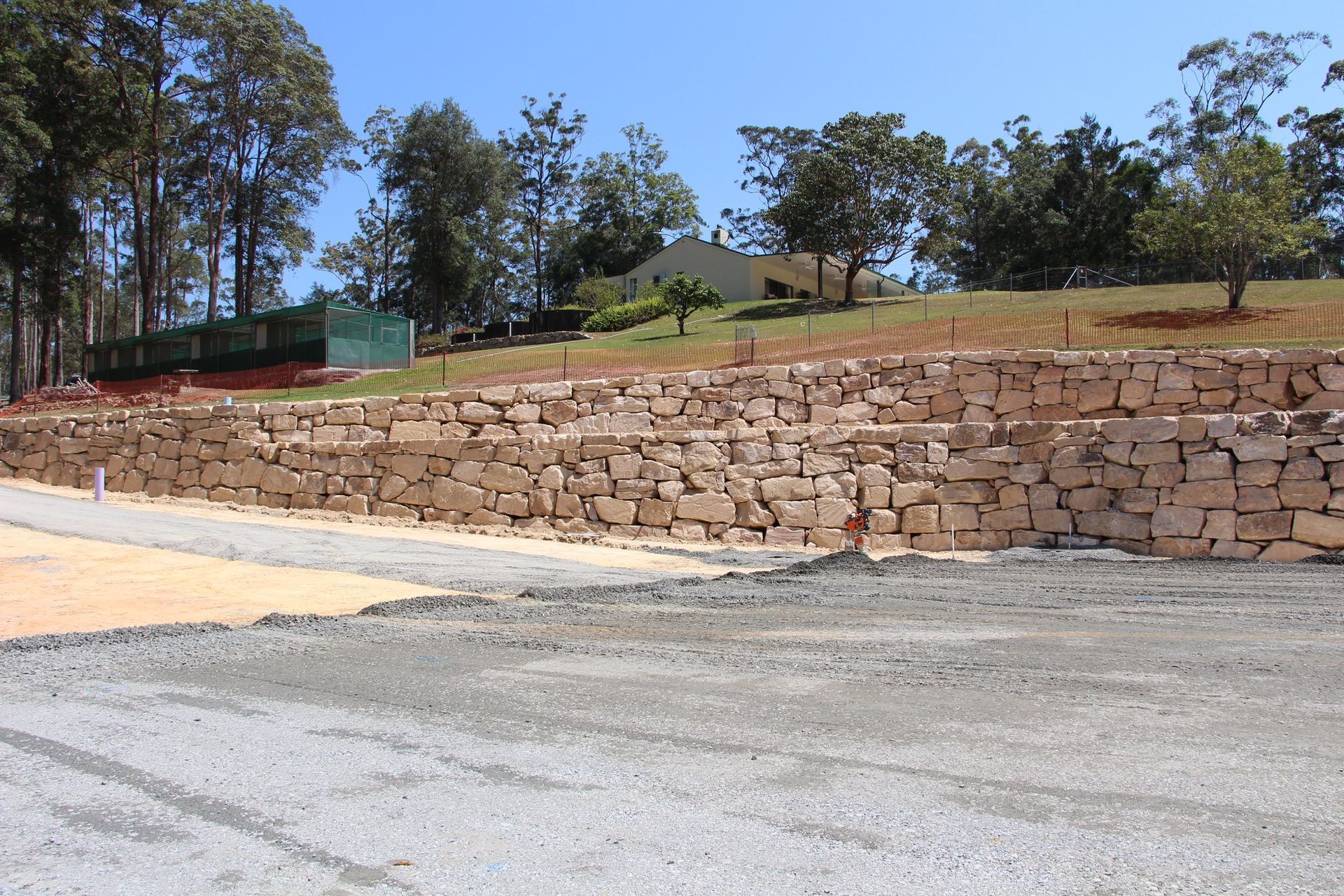
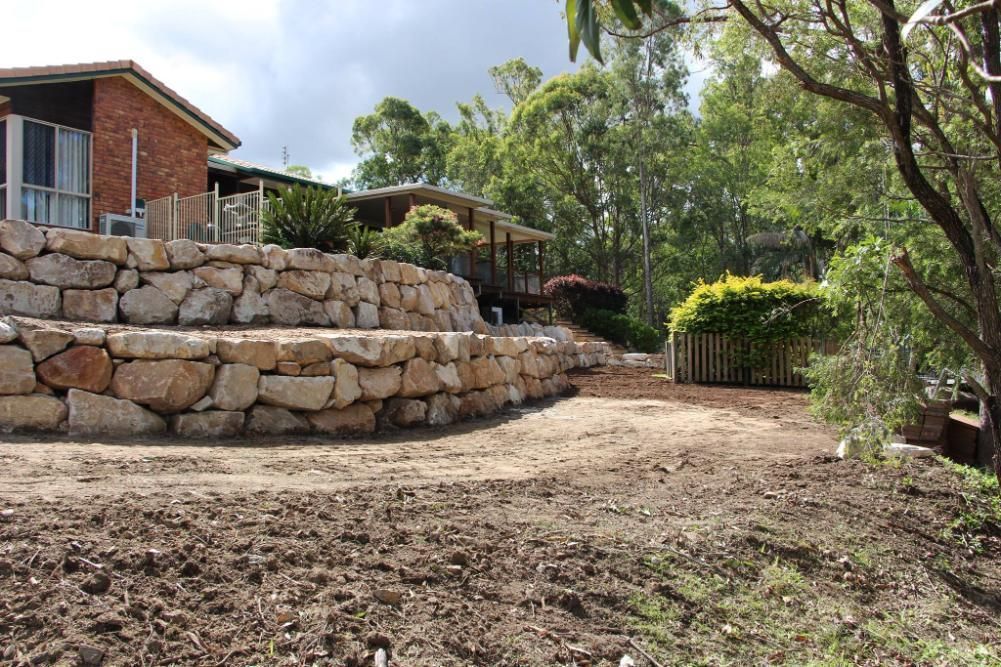
- Sandstone — premium Natural sandstone sits at the premium end of the material spectrum. The upfront cost is higher, but a well-built sandstone wall is essentially maintenance-free and can last decades. On coastal and hinterland Gold Coast properties where the wall is visible and the aesthetic matters, sandstone is often the choice that ages best and requires the least intervention.
- Natural boulder / rock wall — premium Boulder and rock walls are at the top of the material cost range. On steep or erosion-prone blocks, a natural rock wall is often the better long-term spend — the sheer mass of the material provides structural stability that engineered alternatives have to work harder to match. For Gold Coast hinterland properties with significant grade changes, rock walls are frequently the most cost-effective solution when you factor in engineering and rebuild costs over time.
Is a Timber Retaining Wall Actually Cheaper Long Term?
For low garden walls on well-drained sites, yes — timber is genuinely the right material and the cheapest option over its lifespan. But for any wall that is retaining meaningful soil load, or on a Gold Coast site with the coastal moisture conditions that accelerate decay, the lifespan difference between timber and concrete sleeper changes the calculation.
A timber wall that costs less upfront but needs full replacement in ten years, while a concrete sleeper wall on the same site might run 25 to 30 years without intervention, has a higher total cost over that period — even accounting for the lower initial outlay. The honest trade-off: timber is the right choice when the wall is low, short, non-load-bearing and the site conditions are reasonable. It is the wrong choice when any of those conditions do not apply, because the combination of higher moisture stress and load-bearing pressure will accelerate failure.
What Makes a 'Cheap' Wall Expensive Later
The two most common causes of premature retaining wall failure on the Gold Coast have nothing to do with the material itself. They are drainage and engineering.
Skipping Drainage
A retaining wall holds soil back. Behind that soil, water builds up after rain — and on the Gold Coast, that means significant water pressure after every summer storm. Without adequate drainage (an agricultural drain, or agi-drain, running behind the wall with gravel backfill to redirect water away from the wall face), that hydrostatic pressure has nowhere to go except into and eventually through the wall. Skipping drainage is the single most expensive false economy in retaining wall construction. A wall built without it will fail sooner than the material would otherwise suggest, regardless of whether the material is timber, concrete sleeper or sandstone. The drainage component adds to the upfront cost but is not optional — it is what separates a wall that lasts from one that does not.
Skipping Engineering on Taller Walls
Wall height changes everything. Going taller changes the material decision, because retaining wall height limits and approval requirements come into play. Walls over certain heights require engineering and council approval on the Gold Coast, and trying to cut costs by building without it creates both a compliance risk and a structural one. An engineered wall designed for the actual soil load and site conditions will outlast one that was not, every time.
When the Cheapest Option Is Genuinely the Right Choice
There are plenty of situations where a treated timber sleeper wall is the correct answer — and being honest about this is part of giving useful advice:
- Garden bed edging and low ornamental walls under 600mm
- Short runs where the total soil load is minimal
- Non-load-bearing applications on well-drained sites
- Projects where budget is genuinely the primary constraint and the site conditions are favourable
In these situations, timber delivers acceptable performance at the lowest cost, and recommending a more expensive material would be overbuilding. The key is an accurate read of what the wall actually needs to do and what the site conditions are — which is why an on-site assessment produces a more useful recommendation than a material comparison in the abstract.
Cost Per Year of Life: A Fairer Way to Compare
Rather than comparing upfront cost alone, dividing the estimated total cost of the wall by its expected lifespan gives a cost-per-year-of-life figure that makes the comparison more honest.
As a rough relativity:
- Treated timber sleeper: lowest upfront, shortest lifespan — on a coastal Gold Coast site with normal moisture exposure, the cost-per-year-of-life may be comparable to or higher than concrete sleeper when a rebuild is factored in
- Concrete sleeper: higher upfront, substantially longer lifespan — cost-per-year-of-life is often lower than timber on sites with load-bearing requirements or moisture exposure
- Sandstone / boulder: highest upfront, longest lifespan with least maintenance — cost-per-year-of-life is often the most favourable of all over a 30–40 year horizon
The calculation changes significantly based on site conditions, wall height and whether drainage is included. For full project pricing by height and access, see our guide on how much a retaining wall costs on the Gold Coast.
Frequently Asked Questions
What is the cheapest retaining wall to build?
Treated timber sleeper is the cheapest retaining wall material available. It has the lowest upfront cost for both materials and labour, making it the entry-level option for homeowners on a tight budget. It is best suited to low, short, non-load-bearing walls — garden edging, ornamental borders, and simple site levelling where the wall does not need to hold significant soil pressure. Timber's lower cost reflects its shorter lifespan compared to concrete sleeper or natural stone, so it is cheapest upfront but not always cheapest over the life of the wall.
Is timber or concrete sleeper cheaper on the Gold Coast?
Timber sleeper is cheaper upfront. Concrete sleeper costs more for both materials and installation, but it lasts significantly longer, handles load-bearing runs and performs better in the moisture conditions that Gold Coast properties experience — heavy summer rainfall, high humidity and the damp coastal soils that accelerate timber decay. For a low garden wall on a well-drained site, timber may be the right call. For anything load-bearing or on a site with moisture exposure, the higher upfront cost of concrete sleeper is likely the cheaper option over the wall's lifespan.
How long does a cheap retaining wall last?
A treated timber sleeper wall typically lasts less than a concrete sleeper or natural stone wall, and that lifespan is further shortened by the conditions common across the Gold Coast. Heavy summer rainfall, sustained humidity and the damp sandy coastal soils in many parts of the region accelerate timber decay beyond what you would expect in a drier climate. A well-built concrete sleeper wall with proper drainage will outlast timber significantly on most Gold Coast sites. Sandstone and natural boulder walls, built correctly, have the longest lifespan of the common options — often lasting decades with minimal maintenance.
Can I save money by skipping drainage?
No. Drainage is what makes a retaining wall work over its full intended lifespan. Without an agi-drain and gravel backfill behind the wall, water pressure builds up after every rain event and eventually causes the wall to move, lean or fail — regardless of the material. Skipping drainage is the most common and most expensive false economy in retaining wall construction. It reduces the upfront cost slightly and significantly increases the likelihood that the wall needs to be demolished and rebuilt years before it should. Including proper drainage from the outset is not optional.
What will my wall actually cost?
It depends on the height, length, access conditions, material chosen and whether drainage and engineering are required. Whichever material you land on, the retaining walls Gold Coast homeowners get the most life out of are the ones built with proper drainage behind them. For a detailed breakdown of how those factors affect the total cost, see our Gold Coast retaining wall cost guide. For a figure based on your actual block, the most useful next step is a free on-site quote — call us on 0411 741 150 or visit our website to get in touch.